

Fused Cast Alumina Bricks: Properties, Types and Applications
1. What Are Fused Cast Alumina Bricks?
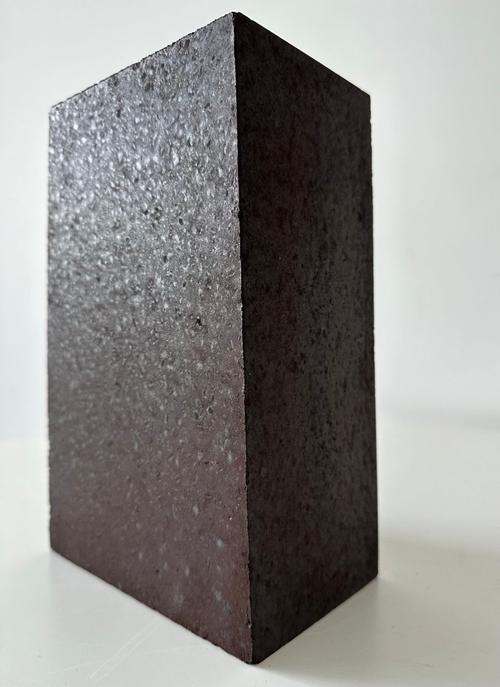
Fused cast alumina bricks are electrofused refractory products made from high-purity industrial alumina as the main raw material, produced through electric-arc melting, casting, and controlled annealing. Compared with conventional sintered bricks, they feature a much denser microstructure, lower porosity and higher density, combined with excellent corrosion resistance and high-temperature strength. They are widely used in glass melting furnaces, electronic glass and photovoltaic glass lines, as well as key zones of various high-temperature industrial furnaces, making them an essential part of modern high-end refractory systems.
2. Manufacturing Process and Quality Factors
The core steps for fused cast alumina bricks include batching, electric melting, casting, annealing and machining. The raw material is melted in an electric-arc furnace above approximately 2200 °C; after degassing and settling, the melt is poured into molds and then slowly annealed for an extended period to relieve internal stress and prevent cracking. The annealing schedule, mold design and pouring control directly determine the density and microstructure of the brick, and are key indicators of a manufacturer's process capability.
3. Main Types
Based on mineral composition, fused cast alumina bricks are mainly divided into two types. Pure corundum bricks (α-Al \(\alpha-Al_{2} O_{3}\) bricks) contain \(\alpha-Al_{2} O_{3}\) (corundum) as the dominant phase, usually above 95%, offering very high refractoriness and strong resistance to alkali vapor and slag attack, and are suited to zones with strict purity and temperature requirements. \(\alpha-\beta\) alumina bricks contain both \(\alpha-Al_{2} O_{3}\) and \(\beta-Al_{2} O_{3}\) phases, combining the high-temperature stability of corundum with the excellent resistance of the β phase to glass-melt attack, and offer good thermal-shock resistance; they are the first-choice material for the superstructure of glass furnaces.
4. Core Properties
Fused cast alumina bricks are dense with low apparent porosity (generally below 2%), giving strong resistance to penetration. They have a high load-softening temperature and can operate for long periods above 1700 °C. They show outstanding resistance to attack by glass melt, alkali vapor and slag, react minimally with the glass batch so contamination is low, and offer good electrical insulation, allowing use as insulating linings around electrodes. Their high dimensional accuracy also enables precise installation.
5. Main Applications
Fused cast alumina bricks are widely used in the superstructure of glass melting furnaces, including the crown, breast walls, port necks, doghouse and throat, as well as in hightemperature resistance furnaces and special glass production lines for electronic glass, photovoltaic glass and float glass. Selection should take into account the operating zone, working temperature and type of glass, and determine the brick profile, size and grade accordingly.
6. Selection and Procurement Advice
It is recommended that customers provide furnace working-condition drawings and technical requirements to the manufacturer, so that the professional supplier can complete brick-type selection, forming, machining and installation design. Attention should be paid to brick density, porosity, annealing quality and dimensional tolerance, and the manufacturer's process consistency and batch stability should be evaluated to ensure safe and long-term furnace operation.
