

Grade Selection and Application Guide for Fused Cast AZS Bricks
1. Introduction
In glass furnace design, zones in direct contact with molten glass, such as the tank walls and the throat, are critical to furnace life and glass quality. Fused cast AZS zirconia corundum bricks, with their excellent corrosion resistance, have become the mainstream lining material for these zones. Correct grade and brick-profile selection is an important prerequisite for extending furnace life and lowering overall cost.
2. Grade Differences and Selection Logic
AZS bricks are classified by zirconia content into grades such as AZS33, AZS36 and AZS41. The higher the content, the stronger the corrosion resistance and temperature performance, but also the higher the cost. Selection should balance performance and cost: for zones with lighter attack, AZS33 can be chosen to control cost; for critical zones such as tank walls and the throat, AZS36 or AZS41 is recommended to ensure life; for special glass or demanding conditions, a customized grade with higher zirconia content may be used.
3. Selection Advice by Zone
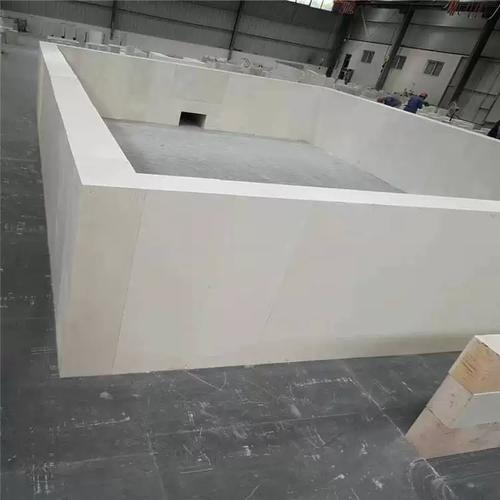
For tank wall blocks, AZS36 and AZS41 are preferred to resist glass-melt attack and extend furnace life. For tank-bottom paving and the throat, high-zirconia grades are selected to withstand melt wash-out and penetration. The doghouse and electrode zones require a balance of corrosion resistance and electrical insulation. For regenerator checker bricks, the grade should match the temperature and atmosphere while balancing heat resistance and corrosion resistance.
4. Glass-Phase Exudation and Usage Notes
AZS bricks show a small amount of glass-phase exudation at high temperature, a normal feature that promotes self-densification. However, the exudate may react with the glass batch, so furnace temperature and atmosphere should be controlled according to process requirements to avoid affecting glass quality. During installation, proper expansion joints should be reserved, and brick machining precision and annealing quality ensured.
5. Procurement Key Points
When procuring, verify that apparent porosity, density and phase composition meet the grade standard; check dimensional tolerance and surface quality; confirm the manufacturer's stable electrofusion, annealing and machining capability; require material inspection reports and factory certificates; and have the manufacturer complete the installation design based on the furnace drawings.
6. Conclusion
Reasonable AZS brick selection and a reliable supplier are important guarantees for the safe, economical and long-term operation of a glass furnace. It is recommended to communicate fully with a professional refractory manufacturer at an early project stage to obtain a targeted technical solution.
